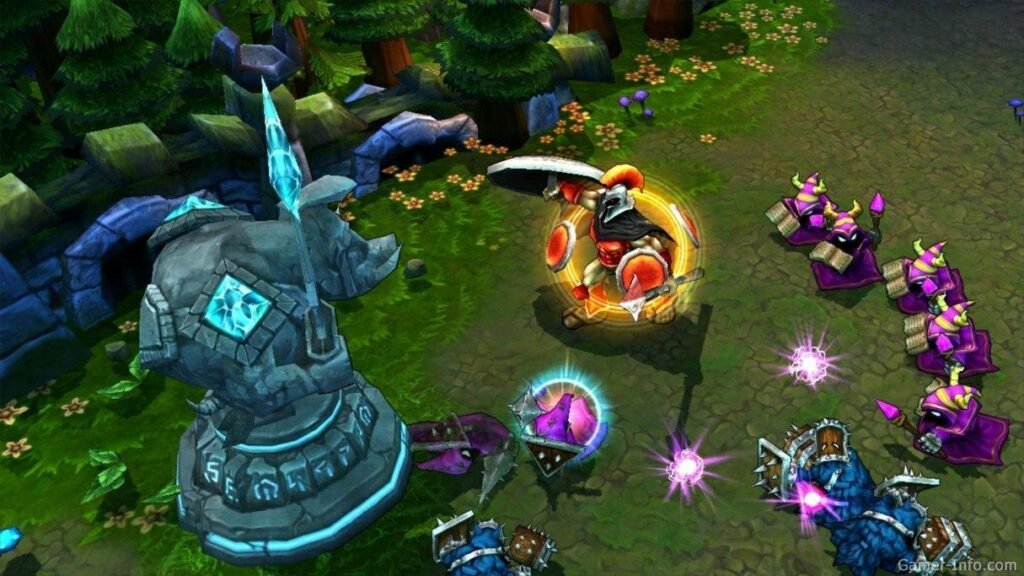
League of Legends (LoL) is one of the most influential multiplayer online battle arena (MOBA) games in the world. Developed and published by Riot Games, it has grown from a small competitive experiment into a global esports powerhouse with millions of active players every day.
Since its release in 2009, League of Legends has shaped modern esports, introduced iconic characters, and built one of the most competitive gaming ecosystems in history.
Table of Contents
ToggleThe Beginning of League of Legends
League of Legends was inspired by the custom Defense of the Ancients (DotA) mod for Warcraft III. The developers wanted to create a standalone game that improved accessibility, matchmaking, and competitive balance.
It officially launched in October 2009 as a free-to-play game with a revolutionary idea: anyone could download and play without paying upfront.
Core Gameplay Structure
League of Legends follows a 5v5 team-based strategy format.
Basic Objective
- Destroy the enemy Nexus
- Defend your own base
- Gain gold and experience
- Work as a coordinated team
Key Elements
| Element | Purpose |
|---|---|
| Champions | Unique playable characters |
| Minions | AI-controlled units |
| Turrets | Defensive structures |
| Jungle | Neutral area for resources |
The combination of strategy, teamwork, and skill made the game deeply competitive.
Rise of Champion Diversity
One of the biggest strengths of League of Legends is its massive roster of champions.
Champion Roles
- Top Lane
- Mid Lane
- ADC (Attack Damage Carry)
- Support
- Jungle
Each champion has unique abilities, lore, and playstyles, allowing for endless strategy combinations.
Growth Through Updates and Balance
Riot Games continuously updates the game to maintain balance and freshness.
Key Improvements Over Time
- New champions added regularly
- Seasonal map updates
- Item system reworks
- Ranked system improvements
These updates keep the game dynamic and competitive even after many years.
The Rise of Esports
League of Legends is one of the most important games in esports history.
Major Competitions
- League of Legends World Championship
- Mid-Season Invitational (MSI)
- Regional leagues (LCK, LCS, LEC)
Why It Became an Esport Giant
| Factor | Impact |
|---|---|
| Free-to-play model | Massive player base |
| Competitive depth | High skill ceiling |
| Spectator-friendly design | Easy to watch |
| Regular updates | Fresh meta every season |
World Championship events now attract millions of viewers globally.
Iconic Moments and Community Impact
League of Legends has created countless memorable moments in gaming history:
- Legendary clutch plays
- Famous pro players and teams
- Viral highlight reels
- Memorable champion releases
The community plays a huge role in keeping the game alive through content creation, streaming, and fan art.
Expansion Into Media and Lore
Riot Games expanded the League universe beyond the game.
Major Expansions
- Animated series Arcane
- Champion cinematics
- Comic books and lore updates
- Expanded world of Runeterra
This transformed League of Legends into a multimedia franchise.
Monetization and Free-to-Play Model
League of Legends is free to play, but generates revenue through:
- Skins (cosmetic upgrades)
- Battle passes
- Event content
- Champion cosmetics
This model ensures fairness while supporting ongoing development.
Challenges and Criticism
Despite its success, League of Legends has faced criticism:
- High learning curve for beginners
- Toxic behavior in competitive matches
- Long match durations
- Meta imbalance at times
Riot Games continues to improve systems to address these issues.
Final Thoughts
The history of League of Legends shows how a simple idea inspired by DotA became one of the most successful competitive games ever made. Developed by Riot Games, it has defined modern esports, shaped online gaming culture, and built a massive global community.
From its 2009 launch to today’s worldwide tournaments and expanded universe like Arcane, League of Legends continues to evolve while remaining true to its competitive roots.
Its legacy is not just as a game, but as a global esport phenomenon that changed how people view competitive gaming.